Bel Royal Primary School
Design & Technology
Design is not just what it looks like and feels like. Design is how it works.
Steve Jobs
Intent
At Bel Royal School, Design Technology enables pupils to explore how ideas become real-life solutions. Through practical projects rooted in real-life contexts, pupils learn to design, make, and evaluate products. The subject brings learning to life and reinforces our school values of Believe, Achieve and Include.
Our intent is for pupils to believe in their ability to think creatively and solve problems, while developing knowledge and skills that connect learning across the curriculum and beyond the classroom.
Through Design Technology, pupils:
-
Apply real-life problem‑solving, designing products for purposeful outcomes
-
Develop practical skills alongside critical thinking and resilience
-
Understand how design choices affect people, communities and the environment
-
Make meaningful connections between Design Technology and other subjects, including:
-
Mathematics – measuring, tolerances, scale, angles, data and graphs
-
Science – materials properties, forces, structures, electronics and energy
-
Computing – CAD/CAM, control systems and digital design
-
Art – creativity, aesthetics, form and visual communication
-
Are supported and challenged so that all pupils feel included and able to achieve success
Planning for Design Technology ensures a clear understanding of design processes through the steps: investigating, designing, making, and evaluating. Our curriculum is aspirational, inclusive, and carefully sequenced to build confidence and competence over time.
Implementation
Design Technology at Bel Royal School is delivered through a carefully structured, progressive curriculum that reflects the KS1 and KS2 Jersey Curriculum. Learning is centred around the four key stages of: Investigate, Design, Make and Evaluate, ensuring pupils experience the full design journey in a clear and purposeful way.
-
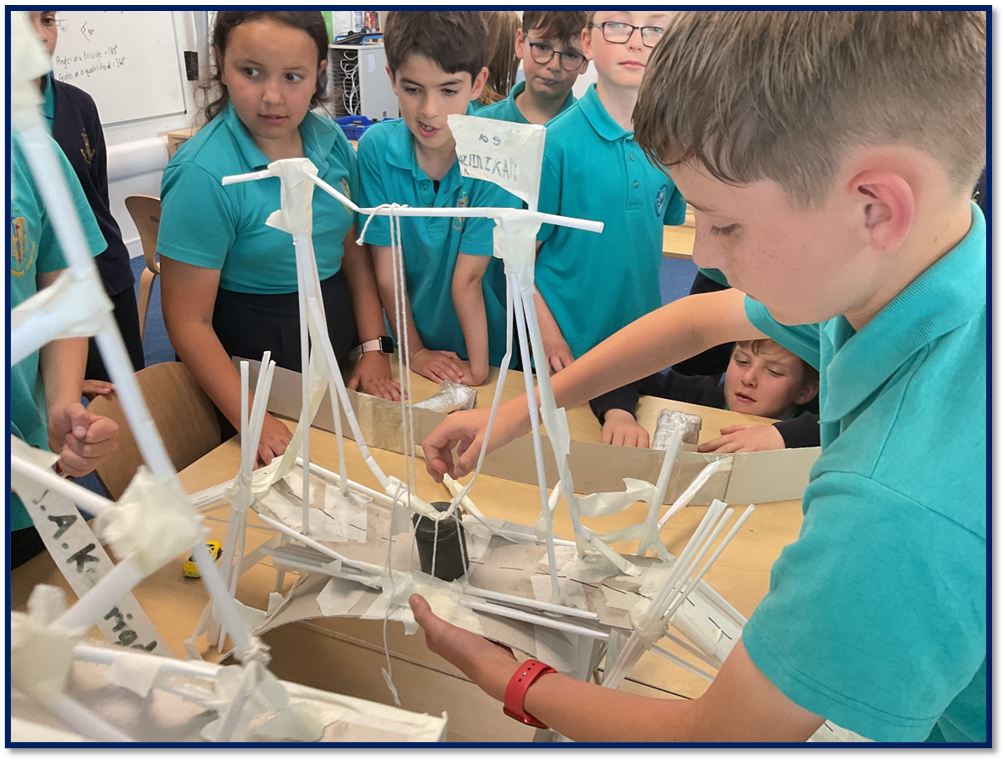
Investigate: Pupils explore real-life problems, user needs and existing products. They gather information through discussion, research and practical exploration, making links to learning in science (materials, forces), maths (measuring, data), and computing (digital research and design tools).
-
Design: Children generate ideas, sketch designs, label diagrams and plan steps, using mathematical knowledge such as measurement, scale and shape. They are encouraged to think creatively, believe in their ideas, and justify design choices.
-
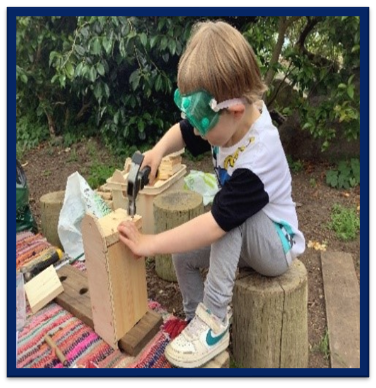
Make: Pupils safely use tools, equipment and materials to create their products. Practical skills are modelled and developed progressively, with strong emphasis on accuracy, problem-solving, and collaboration.
-
Evaluate: Children test their products against success criteria, reflect on what has worked well and suggest improvements. They consider how designs meet user needs and how changes could improve functionality or sustainability.
Across all stages, teachers make explicit links to real‑life applications and other curriculum areas, helping pupils understand how Design Technology supports learning beyond the classroom. Lessons are adapted to support all learners, ensuring challenges, engagement and inclusion so that every child can achieve success.
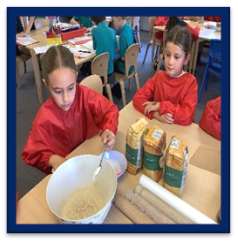
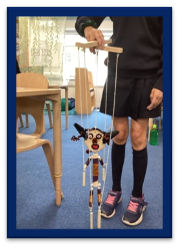
All pupils will explore structures, mechanisms, and systems and apply scientific and mathematical ideas to make designs stronger, more stable and functional. This knowledge underpins effective and purposeful design. Children also learn the importance of healthy eating and planning, preparing and cooking a range of balanced dishes. At Bel Royal, we are fortunate to work alongside Caring Cooks, who support the delivery of Food and Nutrition lessons. These take place in our designated Food Technology room. Our pupils benefit from this fully equipped room to allow the space and resources to work in a methodical and safe way.
Impact
As a result of the Design Technology curriculum at Bel Royal School, pupils develop the confidence to believe in their ideas and apply their learning to real-life situations. They become creative problem solvers who can think critically, work both independently and collaboratively, and take pride in producing purposeful, high‑quality outcomes.
Pupils demonstrate strong practical and technical skills, using tools, materials, and digital technologies safely and effectively. They can transfer knowledge from subjects such as maths, science, and computing into practical contexts, understanding how learning connects across the curriculum, and supports everyday life.
Through continuous reflection and evaluation, pupils learn to refine their ideas, respond positively to feedback, and improve their work. They develop resilience, independence, and the ability to articulate their design decisions using appropriate technical vocabulary. Importantly, all pupils feel included and supported to succeed, regardless of starting point.
By the time pupils leave Design Technology at Bel Royal School, they are well-prepared to achieve success in future learning. They leave equipped with transferable skills, an awareness of sustainability and real-world design, and the confidence to engage thoughtfully with the challenges of a rapidly changing world.
In Key Stage 1, pupils engage in simple, practical activities that introduce them to designing and making in familiar contexts such as the home, school, and local environment. They create purposeful and appealing products, learn to communicate ideas through drawing and modelling, and begin to explore tools, materials, structures, and basic mechanisms safely. Pupils also evaluate their work and existing products, developing early critical thinking skills.
In Key Stage 2, pupils build on these foundations with increasing complexity and precision. They undertake more detailed research, use design criteria, develop prototypes, and apply technical knowledge of structures, mechanisms and electrical systems. Pupils make stronger links between Design Technology and other curriculum areas, applying mathematical measuring skills, scientific understanding of materials and digital technologies such as CAD and control systems. Evaluation becomes more analytical, considering user needs, functionality, and impact.
Across both key stages, the curriculum also includes Cooking and Nutrition, enabling pupils to develop essential life skills. Pupils learn where food comes from, understand the principles of healthy eating, and prepare dishes safely and hygienically, with increasing independence as they progress.
Overall, the Jersey Design Technology curriculum equips pupils with transferable skills, creativity and technical understanding, preparing them for future learning, everyday challenges and participation in the modern world.